
A chipped front tooth before a wedding can feel like an emergency with a countdown clock attached. Maybe you are in the wedding party, or perhaps you are the parent of a bride or groom, and every photograph feels like a deadline. In moments like these, the most useful question is not which treatment sounds best in theory. It is what fits your calendar and in what order.
This guide walks you through that sequencing. You will learn why a deadline changes the plan more than the procedure itself, what dental bonding involves, and why smoothing or bonding first can give you an immediate, presentable result. We will also explain why whitening before any bonded repair matters for shade matching, what can realistically be done in three weeks, and when porcelain veneers make sense. A short consult with photos can turn a stressful date into a clear plan. If you are looking for a dentist in North Wilmington to help you prepare, Naamans Dental in Wilmington, Delaware is here to answer your questions and help you take the next step.
Why a Deadline Changes the Plan More Than the Procedure
A chipped front tooth, a wedding in three weeks, and a search for "the best" treatment: that is the real situation behind most searches like this one. The question sounds like a matter of choosing a procedure, but when a date is fixed, the decisive question changes. It becomes what can be completed, settled, and color-matched before the event, and in what order.
Front teeth are the most visible and the least forgiving of shade mismatch. Covering the chip is the simple part; blending the repair into the neighboring teeth, which catch light at slightly different angles, is the challenge.
No article can promise what will be finished in three weeks. Chip size, depth, nerve involvement, and gum position are determined at an examination, not from a description. The same logic of weighing time and trade-offs applies across dentistry, much as it does when comparing a dental implant, bridge, or partial denture.
For an anxious reader, here is the tone to hold onto: this is a planning problem with options, not an emergency verdict. A short visit with photos is what turns the deadline into a dated plan.
What Is Dental Bonding (Composite Bonding)?
With that calendar in view, it helps to define the option that most often fits a short deadline. Dental bonding uses a tooth-colored resin composite applied directly to the tooth, sculpted into shape, and hardened with a curing light. The terms composite dental bonding and dental bonding composite describe this same direct procedure. Bonding is a direct, chairside procedure, your dentist places and shapes the material at the visit. Because no laboratory step is required, it can often fit a tighter schedule than lab-fabricated options, though appointment structure depends on your individual case.
On a front tooth, bonding can rebuild a broken corner or edge, close a small gap, cover a stain, or smooth an uneven or slightly rotated shape. It is durable and repairable, but not permanent or unbreakable. It can chip, wear, stain at the margins, and need repair or replacement over time. Results depend on the individual tooth. One complication shapes the rest of this article: composite shade can shift over time and with whitening, and color stability remains a recognized challenge for these materials. That is why the order of whitening and bonding deserves its own discussion.
Smoothing or Bonding First: The Immediate, Photograph-Ready Step
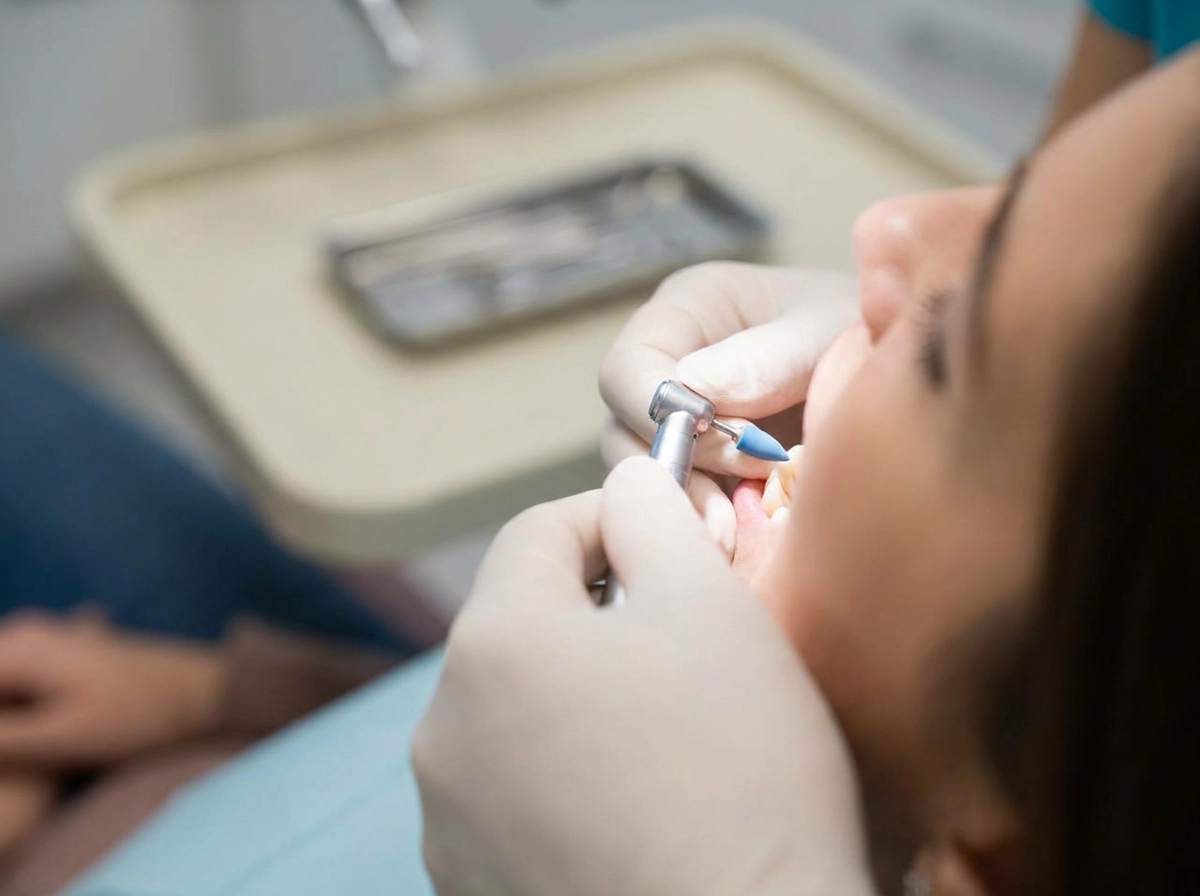
Because composite shade can shift (as discussed above), the first step is often the least invasive one. If the chip is only a minor edge irregularity, gentle smoothing and polishing can make a front tooth read as even again without adding material. When tooth structure is actually missing, a small composite repair can rebuild the lost corner.
That immediacy matters on a wedding calendar. A smoothed or bonded tooth is presentable for engagement photos, dress fittings, showers, and any event before the wedding itself. It is also conservative, and later options stay open.
There is a sequencing catch. A repair placed before whitening may need its shade refreshed afterward, because whitening changes the color of the teeth around it. Photos taken at the consult help show how the edge catches light from different angles, which can look different from the bathroom mirror. A short visit, much like your new-patient exam and cleaning, can include those photos and set the next dates.
Why the Order of Treatment Matters: Whiten Before You Bond
A 2024 laboratory study published in the Journal of Dentistry aged four composite resins and then bleached them. Nearly all materials shifted in color and translucency across the three aging methods tested, with coffee exposure producing the largest changes. That is laboratory data on specimens, not a promise about your result. Because composite is not immune to shade change, your dentist may prefer to whiten first and bond afterward. That is a clinical judgment for your tooth, not a universal rule. For more on whitening options, you can ask at your consultation. Whitening also needs time for the shade to settle before your dentist selects a shade for bonding, which can make three weeks tight. If the chip needs an immediate fix, your dentist may place the repair now and refine its shade after whitening is complete. The match is also a moving target: natural teeth shift with age and habits such as coffee, tea, and red wine, so the shade you match today is not the shade you will match in five years.
What Can Realistically Be Done in Three Weeks
Three weeks can be enough, but that depends on the chip, the tooth, and you. In many cases, smoothing a minor rough edge or placing a small bonded repair fits comfortably. Whitening followed by bonding can also fit, if everything moves on schedule. Only an examination confirms that, and a dentist sets the real dates.
A plausible sequence looks like this: a short consult with photos in week one, whitening started early enough to finish and settle, and bonding placed in the final week for the freshest shade match. Porcelain veneers are custom-made and require additional steps beyond a single chairside visit, which is why they rarely fit a short countdown.
Several findings at examination can change the plan, your dentist will look at the full picture and advise you on next steps.
Book earlier than feels necessary. A buffer week absorbs a rescheduled visit, a shade adjustment, or a whitening session that needs extra time. Availability and appointment length are confirmed when you call to schedule, so nothing here is a promise of same-day care or guaranteed timing.
When Porcelain Veneers Make Sense (and When They Do Not)
Because lab fabrication adds time beyond what a three-week window usually allows, veneers make the most sense when they were already planned and underway, or when the event motivates a longer-term approach. If porcelain veneers were already part of your plan, or if the wedding has you wondering whether a larger change is worth considering, here is the honest picture. Porcelain veneers are thin, custom-made shells bonded to the front of teeth.
Before recommending veneers, a dentist assesses enamel condition, bite forces, how much tooth structure would be prepared, and whether your shade goal is realistic next to the neighboring teeth. Veneers typically require removing some enamel, and that change is not reversible. It deserves more deliberation than a short countdown usually allows.
Veneers make the most sense around a wedding when they were already planned and underway, or when the event motivates a longer-term plan: a bonded repair now to look and feel presentable, then veneers after the date has passed.
Cost, coverage, and scheduling are reviewed with you at the consultation, after the office verifies the details of your specific case. That conversation keeps the decision grounded in your tooth, your timeline, and your goals.
A Short Consult With Photos Converts a Deadline Into a Plan With a Date
The next step is not more research. It is a short visit with photos. A phone picture shows what the chip looks like; an examination shows what it needs, and those are not always the same thing.
At the visit, your dentist takes a close look at the chip and surrounding enamel, checks for sensitivity or pain, and photographs the tooth from a few angles. You also talk through your wedding date and what matters most about it. Those photos do double duty: they help plan the shade and sequence, and they give you a before image to compare against after treatment.
Ask for the plan in writing. Note which step happens this week, which step has to wait, and the date each step needs to be finished. Naamans Dental is at 2018 Naamans Road, Suite 2 in Wilmington, Delaware, and patients travel from North Wilmington, Brandywine Hundred, and nearby southeastern Pennsylvania communities. Learn more about our practice or visit our homepage. This is also the right time to raise comfort, cost, and insurance questions, before anything is started rather than after.
Common Questions About a Chipped Front Tooth Before an Event
You may arrive at that consult with a few practical questions. Here are direct answers to the ones patients ask most often.
Can a chipped front tooth be repaired in one visit? Often yes when the chip is small and composite dental bonding is appropriate. Your dentist confirms that only after examining the tooth.
Should I whiten before or after bonding? Many dentists prefer whitening first so the bonded repair can match the settled shade. The order still depends on your available time and how the tooth looks.
Will my dental insurance cover the repair? Coverage depends on whether treatment is classified as restorative or cosmetic and on your individual plan. Ask the office to review it with you before treatment begins.
What if the tooth hurts or feels sensitive? Sensitivity or pain after a chip can point to a problem deeper than the visible damage. Have it checked promptly rather than waiting until after the wedding.
Is bonding as strong as a porcelain veneer? They use different materials and approaches, with different trade-offs in strength, longevity, and cost. Your dentist can explain which fits your tooth and timeline.
Your Next Step: Turn the Date Into a Plan
The sequencing logic from earlier sections points to one action: book a short consultation as early as you can. Bring the wedding date plus the dates of any earlier event where pictures will be taken. Ask for the sequence in writing: what happens this week, what waits, and the date each step needs to be finished, with a buffer week built in.
To request an appointment or call 302-475-3743, tell the office what date you are working toward so your plan can be built around it.
Conclusion
Sequence, smooth or bond first, whiten before bonding, and reserve veneers for a longer horizon, is what protects both your smile and your calendar. If you are in North Wilmington or nearby Pennsylvania communities and facing a wedding date with a chipped tooth, call Naamans Dental at 302-475-3743 or request an appointment. Bring your photos and your calendar, and let us help you build a plan that protects both your smile and your peace of mind.